How to Create Community Engagement in Esports
Imagine walking up to a huge LED video wall featuring your favorite video game. I mean, not a big TV, but a wall, a full sixteen foot by five-foot screen! All around are players competing in this game. Every table is full. Every console has a crowd. In fact, a crowd is watching the match on the big screen.
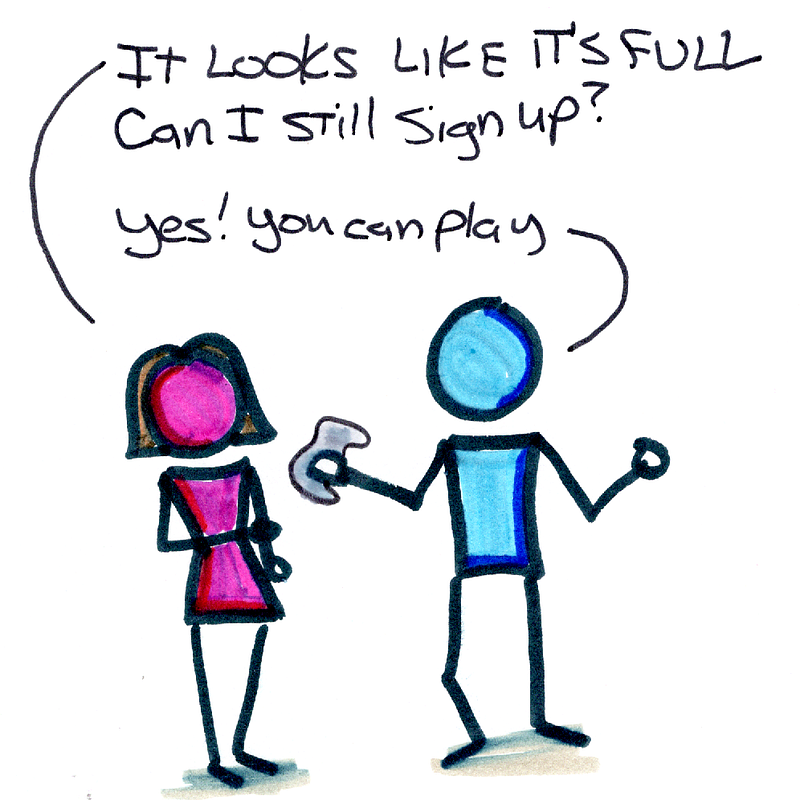
You would probably think, you missed out on all the fun. And if it was any other video game tournament, chances are you would have. However, Bravous tournaments are focused on creating community engagement. If you walked up to someone in a Bravous blue shirt with the word, “Coach” on the back and asked, “It is it too late to register?” The coach would give you a big grin and say, “No! Not at all.”
“You mean I can play?” you might ask, not sure you heard him correctly.
“Yes, you can play,” He smiles back.
Yes, you can play.
At Bravous Esports this has become our signature line and our philosophy across every kind of event we run. Inclusion is one of our highest values. If you are going to show up, we are going to do everything we can to get you into the game.
Where does this come from? And how did we arrive at this slogan? Most importantly, how do we do it?
Keep reading, and I will tell you.
The Origin of Radically Inclusive Gaming at Bravous
One of the things that has come to pass this strange year of 2020, is that I think everyone has an appreciation of how important fans are to any competitive event. When there is no crowd, the game does not feel right. Broadcasters literally pump in computer-generated crowd noise simply to make the games palatable to watch. I remember when I saw the first fans at a professional game this year. It was the World Series played in Dallas, I was shocked and nostalgic. Ah… fans!
The reality is though that aside from high school football and basketball games, most in-person amateur competitions rarely draw a crowd. Even supposedly “big” tournaments have small audiences. Most games are played to a tiny group of parents and friends. Each year when Arizona Little League District 13 in the East Valley of Arizona would host its opening day, thousands of people would line the hills at the Tempe Sports Complex to watch the opening ceremonies and ensuing first round of games. Come championship time, however, when all but two teams had been eliminated, the crowd dwindles to a few dozen families rooting intensely for their children.
I learned in 2018 that esports was no different. All the energy is at the beginning.
Largest In-Person Mario Kart Event Ever (maybe)
Bravous Esports hosted a 220 player Mario Kart Tournament with the Boys and Girls Clubs at the Compadre Branch in Chandler Arizona. To the best of my knowledge, it was the largest in-person Mario Kart tournament ever.
The event was loud, raucous, and full of energy.
At first.
As the event wore on, most players were eliminated. Two factors came into play. First, players had to sometimes wait around for hours until their bracket match. All this waiting sapped their energy. Secondly, as more players were eliminated, the tournament got smaller and more isolated. In the end, eight adults watched four players square off for the championship. While the Bravous team did everything in our power to make the championship match entertaining and rewarding, without an audience, the event felt sad and lonely.
This experience mirrored the many lonely, cold tournaments I had coached my club baseball team through. For some reason I expected video games to be different. Fortunately, tradition had not yet been written in Esports. We had the freedom to try something new.
After our Mario Kart Event, and a similar experience with a Smash Bro’s Ultimate Tournament a week later, I gathered the team and we started to brainstorm ideas to make the tournaments more engaging for everyone, not just the winners. That was when we realized a tournament is just a “list sort”. You are trying to sort a list of players against each other to find out who is number one. It is also true that most tournaments are “lossy” sorts. Put another way, If you are not number one, you are eliminated from the tournament as soon as they can prove you can’t be number one. You know the saying, “Win or go home.” Most people go home. Only one player can end their tournament on a win.
Eliminating everyone is not what you want if you want to have an energetic, fan-supported finale. It also inhibits the types of casual interactions and socialization that build a community.
You want people to stay.
Looking at the problem we saw that most tournaments cater to the most competitive. Organizers invest resources out of proportion to the number of people actually affected.
We wanted to look at it from a fresh angle. We realized there are lots of ways to sort lists. What’s more, not all of them are lossy. Bubble sorts, for example, are a form of sorting that is lossless. Further, we realized that a good number of players did not necessarily come with the expectation of competing for the top position. Most players came to a video game tournament to get out of their house and find other people to play with. They want to meet people who share their interest in the game. By looking at the “tournament” from a new perspective, we believed we could create a fun, competitive type of social gathering designed to connect people.
This also meant that winning was not only _not “_the only thing”, it was not even the most important. Second, you can serve the majority of players and still get a winner. In fact, you would really have to screw up to not get a winner. Instead of focusing on creating the ultimate level of competition for a select few, we created an event that revolved around competition for the majority of people who showed up.
We call this format an “open” (my lossless sort).
It became the basis for our Esports Open. Esports Opens became insanely popular in 2019. They also carried us through all our in-person events in 2020. With the same spirit, we created our Virtual Esports Opens in March 2020 to meet the needs of students isolated by COVID-19. The spirit of inclusion allowed us to contemplate hosting events featuring non-competitive games like Animal Crossing and Among Us.
When you focus on creating the best possible experience for the majority of people, in my experience more people stay engaged. They hang around and watch the stream, send messages, interact with the announcers and other fans. In short, they engage to build community.
From my perspective, “Yes, you can play” is about more than inclusion, it is the foundation of community. When you feel welcome to play, you feel included.
When you feel included, you are more likely to make a friend.
Ultimately, this is the meaning of “Yes, you can play.” We want to create an environment where you can make a friend.